
Repairing Cracked Concrete: What Actually Works?
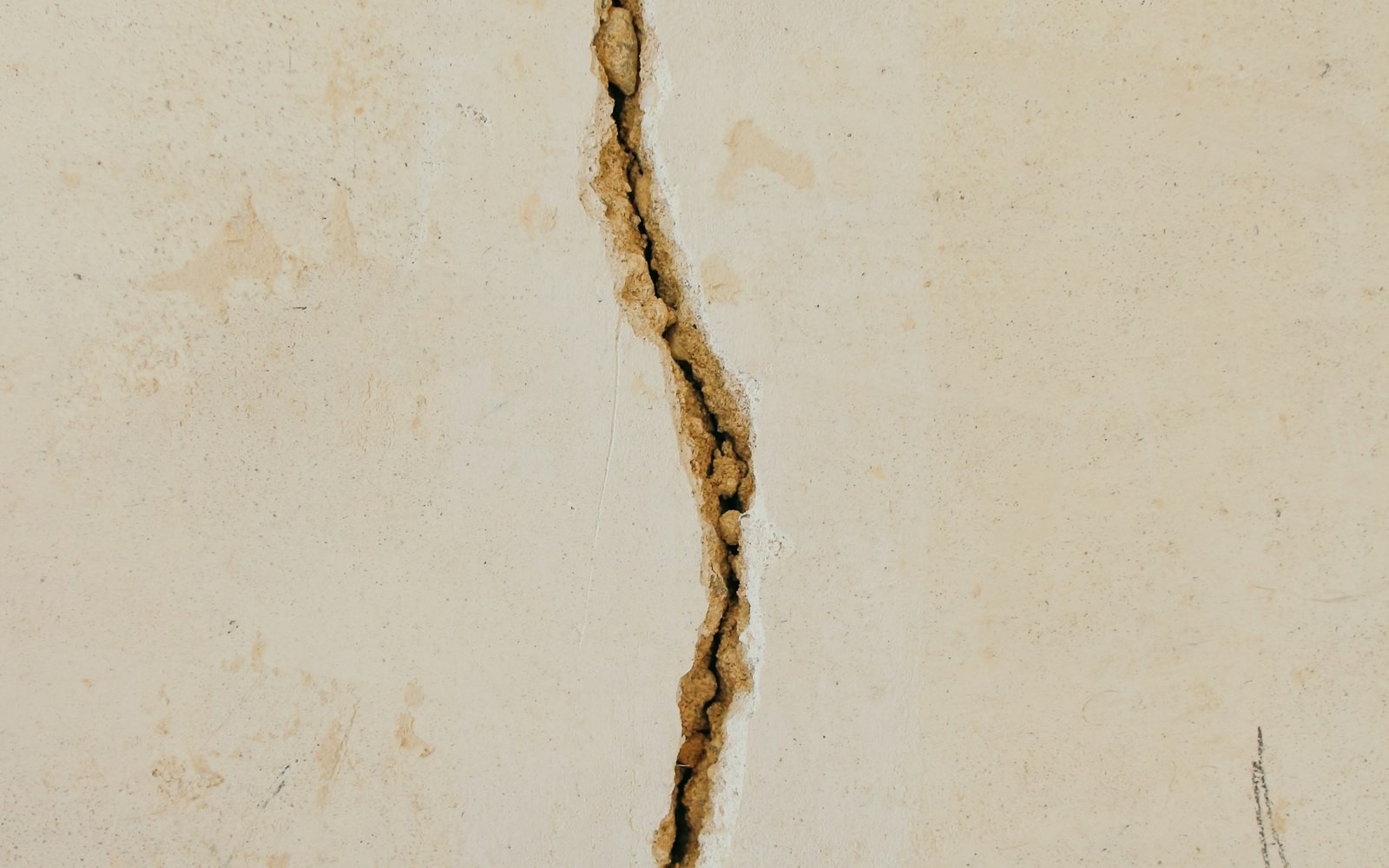
Cracked concrete is a common problem in buildings, structures and other assets. Not all concrete cracks are cosmetic. Some may be evidence of deterioration or failure of the reinforcing steel, waterproofing or other construction elements.
Ignoring concrete cracks can allow water to penetrate the structure and may worsen the condition of the other elements of the structure. Filling or painting concrete cracks will not always provide a lasting solution.
So, what actually works for repairing cracked concrete?
There are several factors that will influence the crack repair method, including the cause of the crack, its width, depth, location, moisture condition and if the crack is still moving.
In this guide, we discuss common causes of concrete cracks, acceptable solutions to these problems, when to call a professional, and other related issues.
Why Does Concrete Crack?
Before choosing a repair method, it is important to understand why the concrete has cracked in the first place. Treating only the visible damage without addressing its underlying cause can result in recurring problems.
Several factors can contribute to concrete cracking.
1. Concrete Shrinkage
When concrete loses moisture as it cures, it shrinks and can potentially crack. This type of cracking is called shrinkage cracking.
Shrinkage cracking is commonly seen in newly constructed walls and slabs of concrete.
2. Temperature Changes
As concrete temperatures change, the volume of the concrete changes as well. These alterations can create stress in the concrete, particularly if movement joints and flexing are restricted. Over time, these changes can cause cracking.
3. Water Penetration and Moisture
Water can seep into cracks, which can be detrimental to the durability of the concrete and lead to disintegration.
In reinforced concrete structures, water can facilitate corrosion of the reinforcement, especially if other related conditions exist.
Corrosion of the reinforcement can cause the surrounding concrete to break away, especially if the steel expansion creates an internal pressure.
4. Structural Movement and Settlement
Different settlement and movement of the support structures can create loads that the concrete cannot withstand. This problem is usually due to excess loading, design issues, and construction issues.
Cracks caused by these issues may require an engineering investigation prior to any repair work.
5. Reinforcement Corrosion and Concrete Cancer
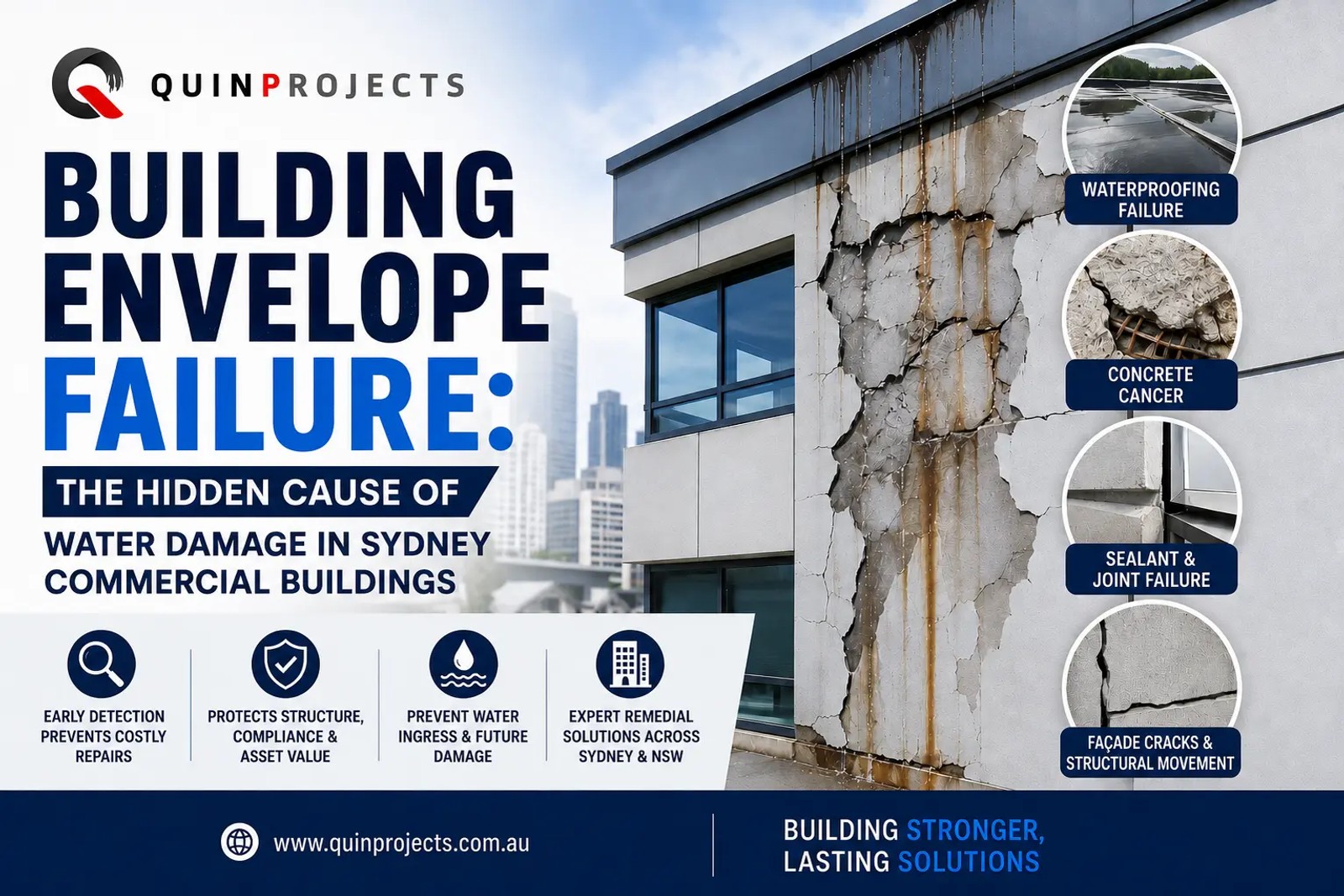
When rebar corrodes, it’s known as concrete cancer. Corrosion causes the steel to expand, which leads to cracking and spalling of the concrete. This often occurs on structural elements, like balconies and car parks, as well as other reinforced concrete structures and elements.
Concrete cancer requires repair of both the concrete and the steel, as covering the cracks won’t solve the problem.
Different Types of Concrete Cracks You Should Know
Not every concrete crack requires the same treatment. Understanding the type of crack helps determine the most appropriate repair approach.
Hairline Cracks
Hairline cracks are very thin surface cracks, typically less than about 0.15 mm wide. There are many causes of hairline cracks, such as shrinkage and changes in temperature.
Some hairline cracks are of no concern, while others, depending on location and pattern, may warrant some level of concern, especially if water can penetrate them.
Hairline cracks should be monitored, and if water can penetrate them, they should be sealed to prevent water from penetrating the concrete.
Structural Cracks
Structural cracks are, as the name implies, cracks that affect the structure of a member, for example, a beam or column. Structural cracks may occur due to excessive load, settlement, or other stresses. These types of cracks should be assessed by a qualified structural engineer prior to the selection and implementation of a repair method.
Settlement Cracks
Settlement of a supporting structure, such as soil, may cause cracking in the structure it supports, such as a concrete slab. Repair of settlement cracks should include remedial measures to address the cause of the settlement.
Shrinkage Cracks
Shrinkage of concrete causes many fine, hairline cracks. These cracks generally do not concern the integrity of the concrete but may affect the appearance or service of the concrete. These cracks should be assessed to determine if they affect the durability and serviceability of the concrete.
Cracks Associated with Concrete Spalling
If the concrete surrounding the reinforcement is deteriorating due to rusting or other factors, cracks may occur and be associated with hollow areas and rust stains or delaminating of the concrete.
These signs may indicate a more serious concrete deterioration problem requiring professional assessment.
Repairing Cracked Concrete: 6 Methods That Actually Work
Successfully repairing cracked concrete requires an understanding of several factors, including the depth of the crack, presence of moisture, environmental conditions, and location of the concrete structure.
Here are six commonly used methods for repairing concrete cracks.
1. Epoxy Injection for Structural Concrete Cracks
Epoxy injection is commonly used to fill suitable cracks in concrete where structural bonding or restoration of continuity is required.
The process involves introducing a suitable epoxy resin into a prepared crack, often using specialised injection equipment.
How it works:
- The crack is assessed to determine whether epoxy injection is suitable.
- The concrete surface is prepared, and injection ports are installed where required.
- The crack is sealed at the surface to control resin flow.
- Epoxy resin is injected under controlled conditions.
- The repair is allowed to cure according to the product specifications.
Best suited for: Suitable stable cracks where structural bonding is required and the surrounding concrete is sound enough to support the repair.
Epoxy injection is not appropriate for every crack, particularly where significant ongoing movement is expected. The repair material and injection method must be selected following assessment.
2. Polyurethane Injection for Water-Leaking Cracks
One of the advantages of using a polyurethane foam system is that it reacts and expands to the shape of the crack, filling the entire pathway through which water is seeping.
The polyurethane system is designed to resist the effects of harsh weather conditions, remaining flexible with high durability.
How it works:
- The source and pathway of water ingress are investigated.
- Injection ports are installed along the affected crack.
- A suitable polyurethane injection material is introduced.
- The material reacts within the crack and helps form a water-resistant seal.
- The repaired area is inspected for continuing leakage.
Best suited for: This repair is most suitable for leaking basement walls and structures, and other areas of concrete impacted by water ingress.
Although polyurethane injection is an effective method of sealing the pathways of water, it should not be considered an alternative to structural crack repairs.
3. Routing and Sealing for Suitable Surface Cracks
Routing and sealing involves preparing the exposed crack to create a suitable profile before applying an appropriate sealant.
This method enables the movement of the structure, provided that an appropriately flexible sealant is used in conjunction with a well-designed joint detail.
How it works:
- The crack is assessed to determine if routing and sealing is the most appropriate method.
- The crack is prepared in line with the assessed dimensions.
- Contaminants and loose materials are removed.
- A primer or backing may be used, where necessary.
- A compatible sealant is then installed and finished.
Best suited for: Suitable non-structural cracks and cracks where water penetration or movement needs to be controlled.
This method is suitable for non-structural cracks where the movement of water needs to be controlled. The movement and exposure conditions of the environment, along with the substrate, need to be considered when selecting the sealant.
4. Cementitious Concrete Patch Repair
Cementitious repair mortar is used to reinstate areas where concrete has deteriorated, chipped or broken away.
It is used to repair broken, spalled, and deteriorated concrete.
This repair is most appropriate when cracking is associated with localised surface deterioration of the concrete.
How it works:
- Damaged and unsound concrete is removed.
- Reinforcement, where exposed, is also assessed and repaired if necessary.
- Proper reinforcement protection and bonding materials are applied.
- Repair mortar is placed and finished.
- The repair is cured and protected in accordance with the specification.
Best suited for: Localised concrete deterioration, damaged edges, surface defects and selective spalled concrete.
For patch repairs to be successful, the substrate must be prepared properly, the material must be selected appropriately and the repair must be cured in accordance with the specification.
5. Structural Concrete Repair and Reinforcement Treatment
Where cracking is caused by more extensive deterioration of concrete or reinforcement or is of a structural nature, more extensive repairs would be required.
Filling visible cracks will not address the underlying issue.
The repair process may include:
- A detailed assessment of the deteriorated concrete.
- Removal of deteriorated concrete to provide a sound substrate.
- Inspection and treatment of the reinforcement.
- Replacement or supplementation of the reinforcement.
- Application of protective and bonding systems.
- Reinstatement using approved repair mortars.
- Final inspection and quality assurance.
Best suited for: Concrete cancer, reinforcement corrosion, significant spalling and concrete defects affecting structural durability or performance.
Structural repairs should follow an appropriate engineering assessment and repair specification.
6. Protective Coatings and Waterproofing Systems
Moisture and environmental exposures can deteriorate concrete. Protective coatings and waterproofing systems can provide long-term durability for repaired concrete elements.
The system selected will depend on the exposure of the element and the nature of the concrete defect.
Common applications include:
- Protective coatings for exposed concrete surfaces.
- Waterproofing membranes for balconies and wet areas.
- Surface protection for external concrete structures.
- Protective systems for suitable basement and retaining wall applications.
- Joint and building envelope sealing.
Best suited for: Concrete structures that need added protection against exposure to moisture and the environment.
Protective coatings should not be used to conceal unresolved cracks or active water ingress.
DIY Concrete Crack Repair vs Professional Concrete Repair
You can sometimes use commercially available repair products to address small, stable, non-structural cracks in suitable ground-level concrete surfaces.
However, DIY repairs are not appropriate for every situation.
The main problem is that a surface filler may cover the visible crack without addressing the reason it developed.
When DIY Repair May Be Suitable
DIY products may be considered when:
- The cracks are small and non-structural.
- There is no evidence of movement.
- Concrete is in a good condition.
- There is no corrosion of reinforcement or significant water ingress.
- The repair product is appropriate for the crack and exposure conditions.
When Professional Repair Is Necessary
Professional assessment is recommended when:
- Cracks are in beams or columns.
- Cracks are widening or re-occurring.
- Concrete is breaking away from the steel.
- There are rust stains adjacent to cracks.
- There is water ingress through the walls or slabs.
- Cracks are related to uneven or structural settlement.
- There is structural damage to a balcony, facade, car park or other common building elements.
For apartment complexes and strata properties, early investigation can help identify defects before they develop into more extensive remedial building issues.
How Do Professionals Repair Cracked Concrete?
Experts know that the process of repairing cracked concrete is more involved than simply selecting a filler or injection material. A good repair process accounts for the cause and extent of the cracking as well as the expected future behaviour of the cracking.
A typical professional approach includes the following stages.
Step 1: Inspection and Assessment
During an inspection, the location and extent of cracking and other forms of concrete deterioration are documented.
Additional investigation or engineering assessment may be required to fully understand the situation and determine the cause of the deterioration.
Step 2: Identify the Underlying Cause
Whether the cracking is related to shrinkage, movement, water, reinforcement corrosion, or other causes is determined.
It is important to understand the cause of the problem in order to design a repair system that will address the problem and not just the symptoms.
Step 3: Select the Appropriate Repair Method
The repair method is chosen to suit the cause, width and movement of the crack and the condition of the surrounding concrete. If an extensive repair is required, strategies such as structural strengthening and replacement may also need to be considered.
Step 4: Prepare the Concrete Surface
Surface preparations appropriate to the chosen repair method are carried out.
Different preparation techniques are required for different repair methods and for the extent of deterioration of the substrate.
Step 5: Complete the Repair Work
Repair is carried out according to the requirements of the manufacturer of the repair materials and equipment.
Step 6: Curing, Protection and Inspection
The repaired area is protected to retard further deterioration and to allow the concrete to cure.
Additional protective measures may be necessary to reduce future deterioration.
Why Early Concrete Crack Repair Matters for Sydney Buildings
Sydney properties face changing weather conditions, moisture, coastal environments, and ongoing building use.
For strata complexes, commercial properties and multi-residential buildings, concrete deterioration can affect more than the appearance of the structure.
Unaddressed defects may contribute to:
- Water Ingress: Concrete deterioration may create pathways for water to penetrate walls and other elements.
- Reinforcement Corrosion: Moisture and other environmental conditions may lead to the corrosion of steel bars.
- Concrete Spalling: Moisture may cause concrete to flake, crack and delaminate.
- Increased Maintenance Costs: Cracked concrete may result in additional expenses to maintain the building.
- Building Safety Concerns: Deteriorating concrete may detach and fall on occupants of the building or on the public.
For both the strata and commercial property manager, organising appropriate inspection and repair work is crucial to the long-term health of the building and to maintaining the value of the asset.
Why Choose Quin Projects for Concrete Crack Repair in Sydney?
Choosing an experienced remedial building contractor is important when dealing with concrete cracks, spalling and structural deterioration.
Quin Projects offers professional remedial services for all your Sydney concrete repair needs such as treatment of concrete cancer, crack injection, repair of concrete spalling and other structural repairs.
With over 30 years of experience, and as a registered Class 2 Building Practitioner (BUP0003576), the team takes care of all types of buildings (residential, multi-residential, commercial and strata).
What Makes Quin Projects a Suitable Remedial Building Partner?
1. Extensive Remedial Building Experience
Established in 1994, Quin Projects has decades of experience in building repairs, maintenance, and remedial constructions.
2. Concrete Crack and Spalling Repair Expertise
Quin Projects offers a range of related remedial works, including concrete crack repairs and injection and the restoration of concrete spalling.
3. Class 2 Building Practitioner Registration
Under the Design and Building Practitioners Act 2020, Quin Projects is registered to perform various remedial building works for the relevant building classes.
4. Integrated Building Remediation
Quin Projects offers a range of related remedial building works and services, including restoration of balconies and building facades, as well as protection and restoration of reinforced steel from corrosion and other issues.
5. Residential, Commercial and Strata Solutions
Quin Projects offers repair and maintenance services for various property types, including commercial and multi-residential buildings.
6. Focus on Compliance and Quality
Quin Projects prioritises quality, compliance with building and associated requirements, Australian Standards, health and safety, and project specifications.
Is your property showing signs of concrete spalling or cracking? Quin Projects can evaluate the issue and develop a remedial action plan to address it.
Explore Quin Projects' concrete spalling and crack repair services to learn more.
Final Thoughts: What Actually Works for Repairing Cracked Concrete?
Many factors affect how concrete cracks are repaired. The best approach for a given situation is often determined in relation to the cause of the concrete deterioration.
Epoxy injections are suitable for stable cracks requiring structural bond. Water-tightness for leaking cracks can be achieved using polyurethane injection. Routing and sealing may accommodate minor surface movements, and cementitious patch repair and reinforcement may be required for concrete that has spalled.
Appearance should not be the only factor considered when selecting a repair method.
Factors including the type and condition of the reinforcement, the type of concrete, the exposure to moisture and the service environment should be carefully assessed before selecting a repair method.
Any of the conditions described above for cracked concrete, spalling concrete, or water penetration should be reported to Quin Projects for assessment and repair as soon as possible to prevent further deterioration.
Quin Projects will assist in the assessment of your concrete repairs and specify a suitable system.
Frequently Asked Questions
1. What is the best method for repairing cracked concrete?
The best method depends on the cause of the crack, its width and depth, and whether it is still moving. Stable structural cracks may suit epoxy injection, cracks that are still moving may need a flexible sealant with an appropriate joint detail, and leaking cracks may be sealed with polyurethane injection. A professional assessment should confirm the right approach.
2. Can cracked concrete be repaired without replacing it?
Yes. Cracks in concrete frequently can be repaired without replacing the entire concrete member. What professionals use depends on the extent of the damage. They may use crack injection, cementitious patch repairs, routing and sealing or reinforcement treatment. If the concrete is badly damaged or structurally unsound, partial or more extensive reconstruction may be necessary.
3. How do I know if a concrete crack is structural?
A crack may be structural if it is wider than about 0.5 mm, is growing, or shows movement or displacement between the elements it joins. Other signs include cracking in beams and columns, and settlement accompanied by spalling of the concrete. Cracks that may be widening should always be evaluated by a qualified professional.
4. Does epoxy injection permanently fix concrete cracks?
Permanent crack repair is achievable if all the right materials, preparation and application are complete. However, epoxy injection does not stop new cracking from ongoing movement or settlement and will not help solve unresolved issues in a structure. The cause of the issue must be determined first before using epoxy injection.
5. How much does concrete crack repair cost in Sydney?
Cost for concrete crack repair in Sydney depends on the size and depth of the crack, location, accessibility, cause and type of repair required. Minor repairs like sealing may be less expensive than structural crack injection, reinforcement and extensive repairs like spalling and concrete replacement. Onsite evaluation will help determine the extent of the repairs and provide a quote.