When Does a Sydney Apartment Building Need Remedial Work? 10 Warning Signs
There are many factors, both internal and external, that contribute to the wear and tear of the building over time. These include changes in climate and moisture, as well as general decay and deterioration. These factors can lead to a range of issues regarding a building’s structural integrity and safety.
Owners, corporations, and strata managers can identify these issues early on, which can help prevent more costly repairs later. There are several issues that may affect a building, and professional remedial builders can assist in restoring it to its previous condition.
The following are 10 common issues that can affect an apartment building:
1. Cracks in the Building
As with any building, cracks in the structure are a clear sign of deterioration. Cracks that widen over time in the structure, concrete, and other load-bearing parts of the building can be a clear indication of a structural defect.
Sydney’s remedial builders can identify the cause of the crack and propose an adequate solution to repair the defect.
2. Water Leaks and Waterproofing Issues
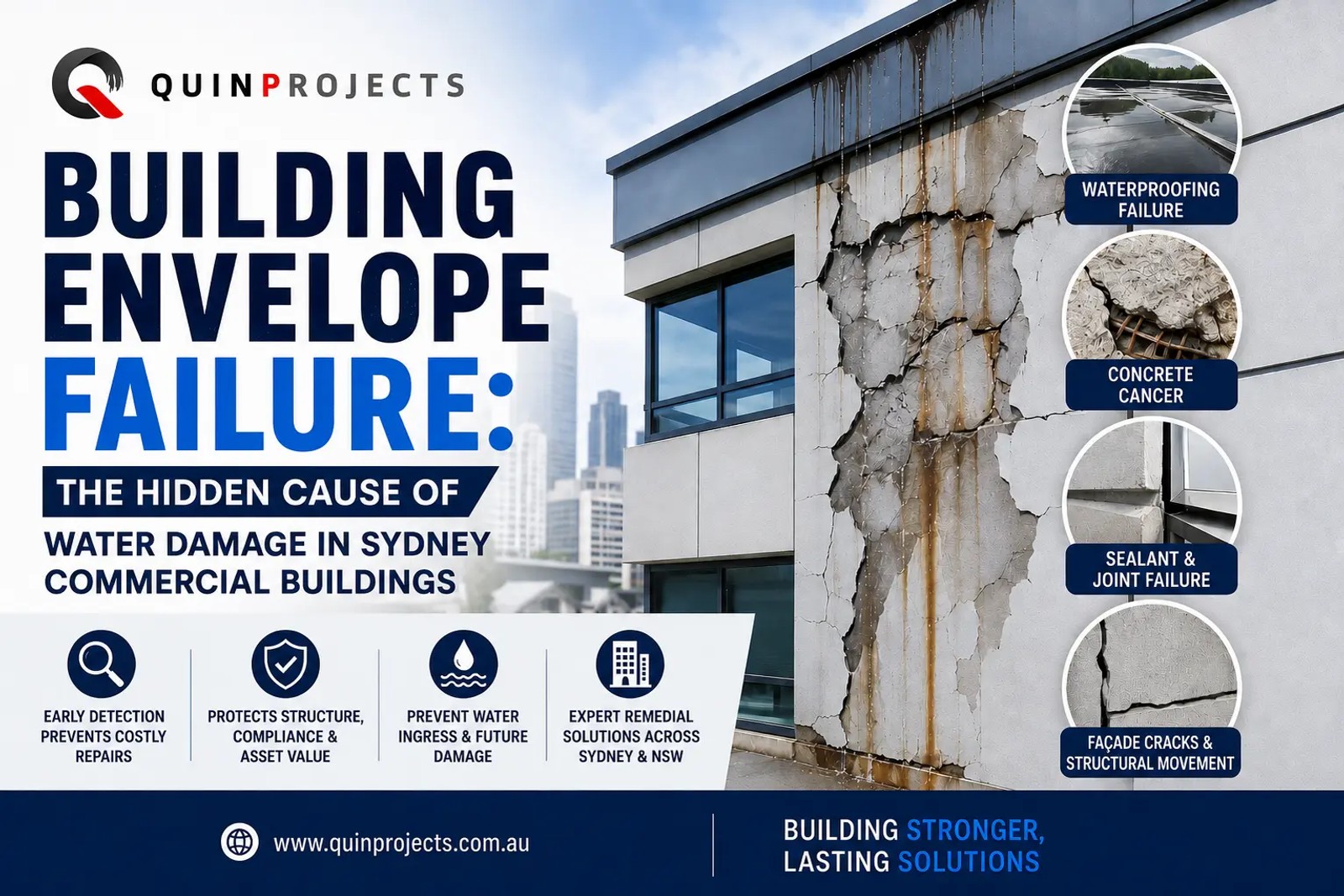
Water leakage is a major issue for apartment buildings and can occur in a variety of areas, including roofs, balconies, bathrooms and basements.
Some of the effects and indications of water leakages can be:
- Water stains on ceilings and walls
- Peeling paint or bubbling plaster
- Persistent dampness and mould
- Water entering basement areas
If waterproofing systems and joints fail, professional remedial waterproofing in Sydney can help repair and restore them before further deterioration occurs.
3. Spalling of Concrete and Exposure of Steel Reinforcement
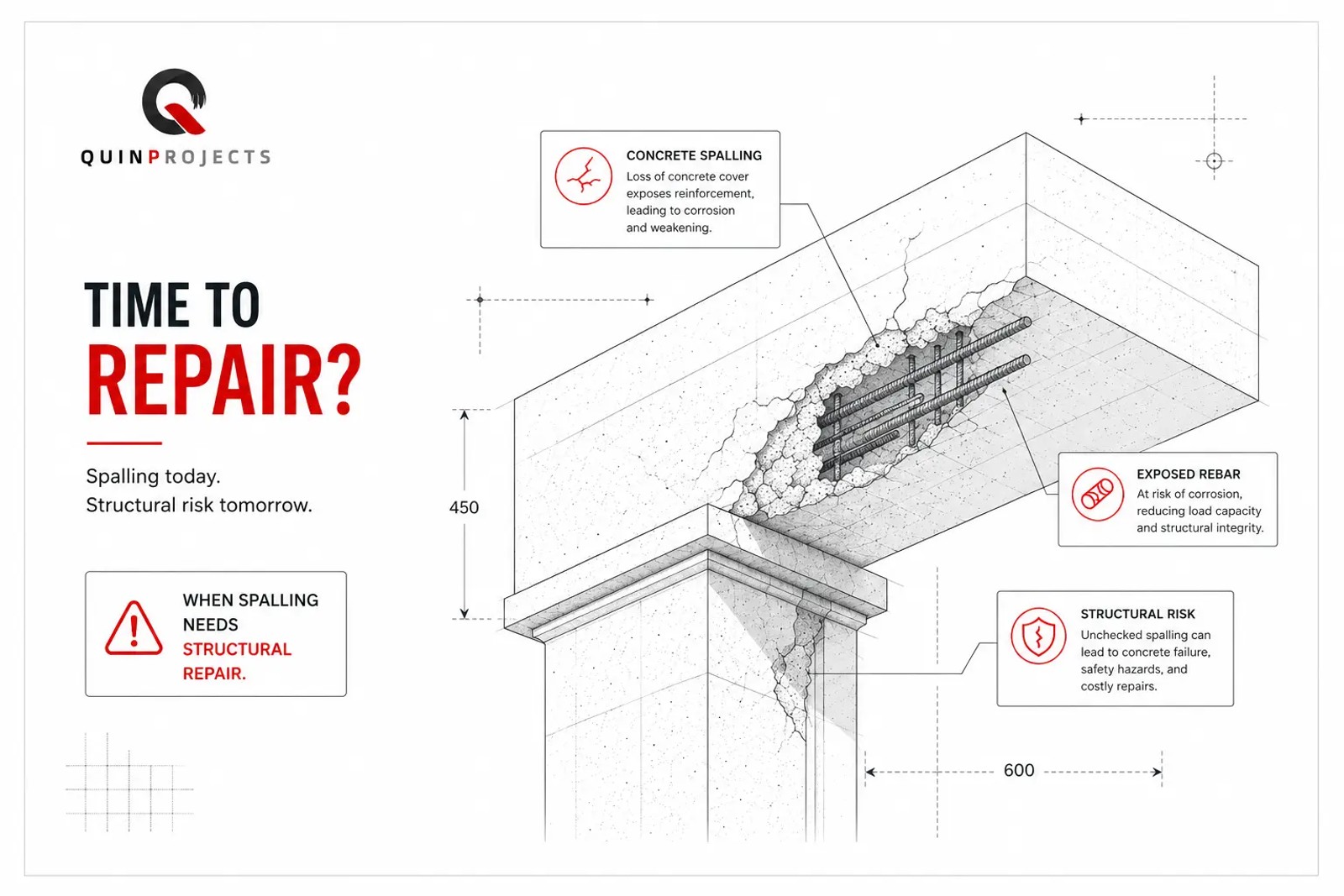
Spalling of concrete occurs when it breaks away and deteriorates, usually due to the corrosion of steel reinforcement.
Rust stains, disintegration of concrete, and exposure of steel reinforcement are all signs of concrete cancer.
These may be visible on a variety of parts of a building, such as columns, balconies and slabs.
Without prompt repairs and maintenance, deterioration can spread and affect other components, including building structure. Remedial construction services can include removal of concrete, repairs and reinforcing treatment, and restoration of concrete.
4. Deteriorating Building Facades
Building facades are an important part of the design and protection of buildings.
Concrete, render, cladding and external joints can all deteriorate.
Restoration of facades can include removal of old concrete, sealing of external walls and repair of cladding.
Buildings in coastal areas should be assessed for moisture and corrosion.
5. Rusting Steel Structural Elements
Rusting can occur on beams, columns and other elements and components of a building.
Loose or flaking paint and rusting can mean that elements are not protected, and this can lead to failure of connections.
Rusting of connections can also affect balustrades and handrails.
Remedial works can include preparation of the steel surface, application of a protective coating, and reinforcing of connections.
6. Damaged Balconies and Unsafe Balustrades
Balcony surfaces can be exposed to the elements and may crack.
Water can collect on balconies and erode reinforcement.
Discrete repair and strengthening of balconies and balustrades may include waterproofing and drainage.
Unsafe balconies should be repaired immediately.
7. Faulty Apartment Doors and Fire Safety Issues
Damaged doors to common areas and inadequate fire seals can cause safety and compliance issues.
Specialist contractors can identify defects affecting door operation.
As required, NCC fire compliance remedial work may include addressing fire-rated door issues and fire-stopping defects and other fire safety measures.
NSW buildings must maintain relevant fire safety standards, with upgrades required in certain circumstances.
8. Basement Water Ingress and Structural Cracks
Basement leaks may affect storage areas, retaining walls and other structural elements.
Cracking and water entering through joints are indicators of water leaks.
Professional remedial builders may recommend injecting cracks, repairing waterproofing, and improving drainage.
Where water is entering a building, a source remedy is required for effective building restoration.
9. Building Code and Compliance Defects
Remedial works may be required to address fire safety and external building enclosure defects.
The scope of remedial works required to satisfy BCA NSW may require regulated designs and compliance declarations by a registered design practitioner.
For Class 2 buildings, remedial works are required to be compliant with the Design and Building Practitioners Act 2020.
Strata managers wishing to engage Sydney-based BCA compliance remedial services should engage appropriately registered practitioners to ascertain requirements.
10. Repeated Repairs without Long-Term Solutions
A building may require repeated repairs to address leaks and cracks. Expanding an existing crack, for example, does not address the root problem of the leak.
Repeated repairs increase the cost of building maintenance without restoring the building to good order and condition.
When Should Strata Managers Organise Remedial Building Repairs?
Strata Managers should organise professional assessments when the defects endanger the safety of the building, affect the common property, or worsen.
In NSW, owners corporations are generally responsible for the maintenance and repairs of the common property, including the roofs, balconies and external walls and structures of the building.
Effective management of remedial services typically requires that the building manager assesses the defects, formulates a remedial plan, instructs the contractors, prepares and manages the compliance documents and lastly undertakes quality control inspections.
Planning the works in advance allows for the effective management of disruptions to residents, and aids in the budgeting process.
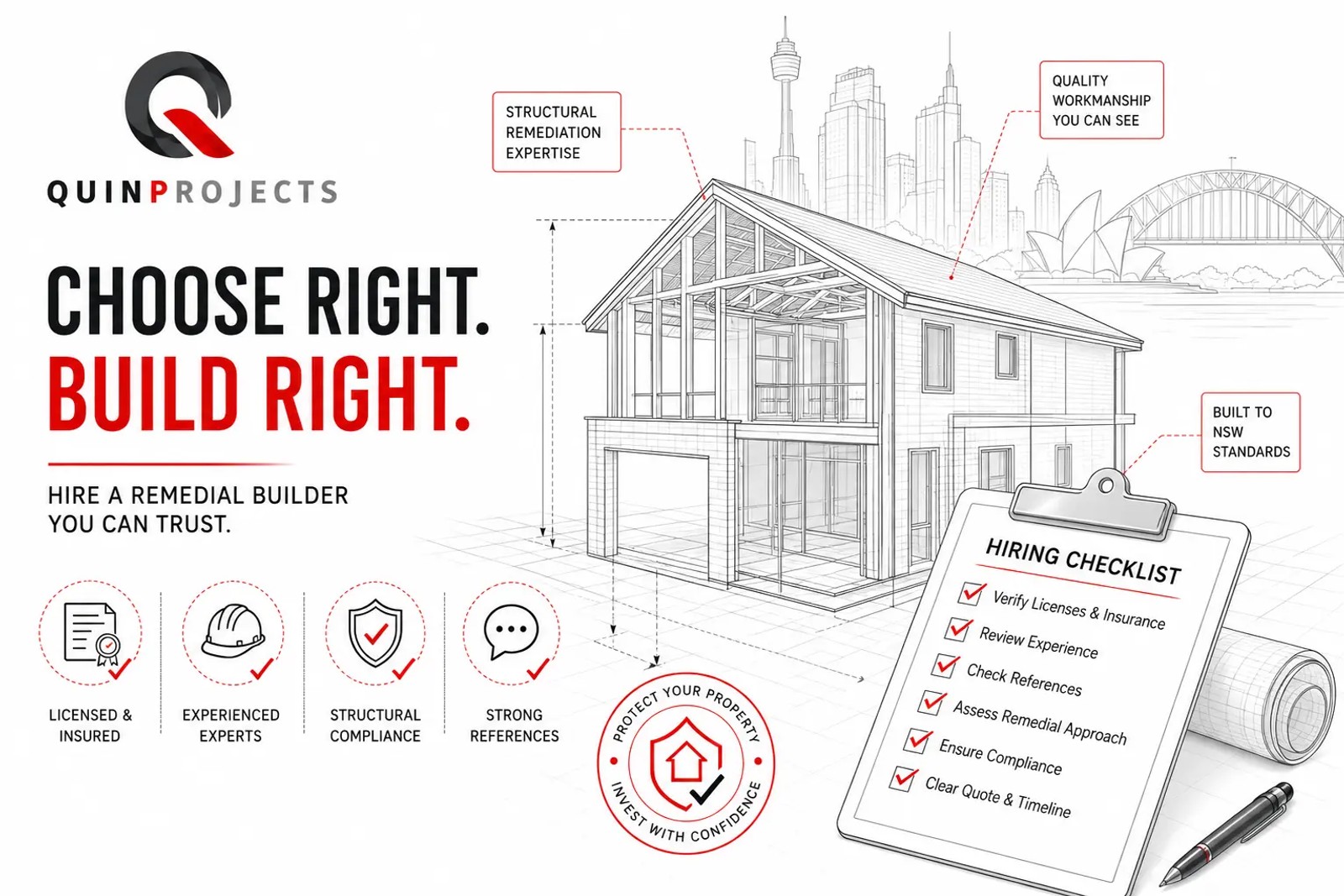
Why Choose Quin Projects?
Quin Projects provides remedial building services to strata and commercial clients across Sydney.
The company is a Class 2 building practitioner and has over 20 years’ experience in remedial building works including concrete spalling repair and remedial waterproofing, facade restoration and treatment of structural steel.
As remedial builders in Sydney, Quin Projects prepares scheduled compulsory building inspections and performs remedial works to ensure building compliance.
Sydney residents should arrange for a remedial building inspection to avoid minor defects developing to major and expensive building defects.
In addition, if your building requires remedial waterproofing works or concrete repairs or facade restoration, contact us for a free, no-obligation site inspection.
Call Quin Projects on 1300 201 253 to engage the services of professional building practitioners licensed in NSW and address your building defect concerns.
Frequently Asked Questions
1. What are the most common building defects in Sydney apartments?
Common defects include water leaks, concrete spalling, facade deterioration, balcony damage, structural cracks, and waterproofing failures.
2. How do I know if my apartment building needs remedial work?
Recurring leaks, exposed reinforcement, widening cracks, damaged facades, and fire safety defects are warning signs requiring professional assessment.
3. Who is responsible for strata building repairs in NSW?
The owners corporation is generally responsible for common property repairs, while individual owners maintain items within their responsibility.
4. What services do remedial builders in Sydney provide?
Services commonly include concrete repairs, waterproofing, facade restoration, steel remediation, structural repairs, and defect rectification.
5. How much does remedial building work cost in Sydney?
Costs depend on the defect type, building size, access requirements, engineering specifications, and repair scope. A professional inspection helps establish an accurate quotation.