Preventive Electrical Maintenance: How Sydney Businesses Can Reduce Downtime and Repair Costs
When a switchboard trips in a busy warehouse or a distribution board fails in an office tower, the repair invoice is rarely the expensive part. The real cost is the stopped production, spoiled stock and idle staff piling up while someone diagnoses a fault nobody saw coming. Most of those faults leave evidence months ahead: heat at a termination, breakers tripping for no obvious reason, gear that hums when it used to sit quiet. Preventive electrical maintenance means finding that evidence on a schedule rather than at 6am on a Monday. This guide covers what a program includes, which faults cause the most downtime in Sydney commercial buildings, how often inspections should happen, and how to choose a partner.
What Is Preventive Electrical Maintenance?
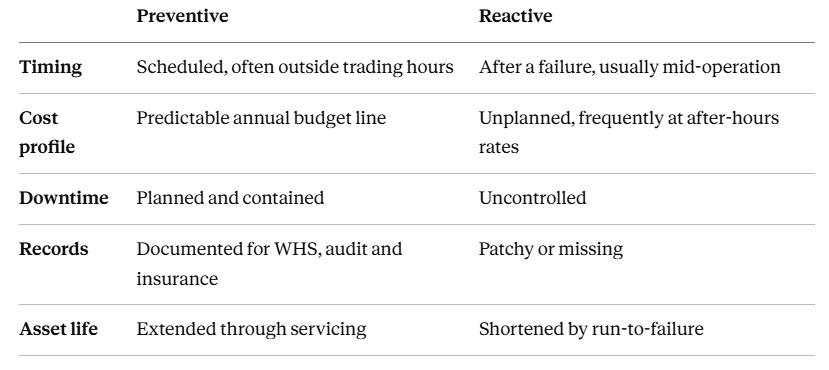
It is the scheduled inspection, testing and servicing of electrical infrastructure, switchboards, distribution boards, protective devices, sub-mains, emergency lighting and connected equipment, carried out before anything fails. Reactive maintenance waits for the failure, then pays for it twice: at emergency call-out rates, and again in lost trading hours.
Australian businesses are shifting toward scheduled programs for three practical reasons. Work health and safety duties sit with the person conducting the business, not the contractor who last visited. Insurers increasingly ask for maintenance records when assessing a fire or equipment claim. And much of Sydney's commercial and strata stock runs switchgear installed decades ago, carrying loads it was never designed for.
Common Electrical Issues That Cause Business Downtime
Overloaded Switchboards
Boards designed for a 1990s tenancy now feed server racks, split systems, kitchen equipment and EV chargers. Overloading shows up as warm enclosures, frequent tripping and eventually a failed main switch at peak trading.
Faulty Circuit Breakers
Breakers are mechanical devices and they age. One that fails to trip leaves a circuit unprotected; one that nuisance-trips interrupts operations and tends to get ignored until something worse happens.
Ageing Wiring Systems
Insulation hardens and cracks over time, particularly in hot roof spaces and plant rooms. Older sub-mains, rodent damage and past modifications by different trades cause intermittent faults that are difficult to find under pressure.
Power Surges and Voltage Fluctuations
Summer storms and network switching send transients through the installation. Sensitive equipment, POS terminals, comms racks, medical and refrigeration controls, usually degrades across several events rather than failing outright. Surge protection and power quality testing address this.
Equipment Overheating
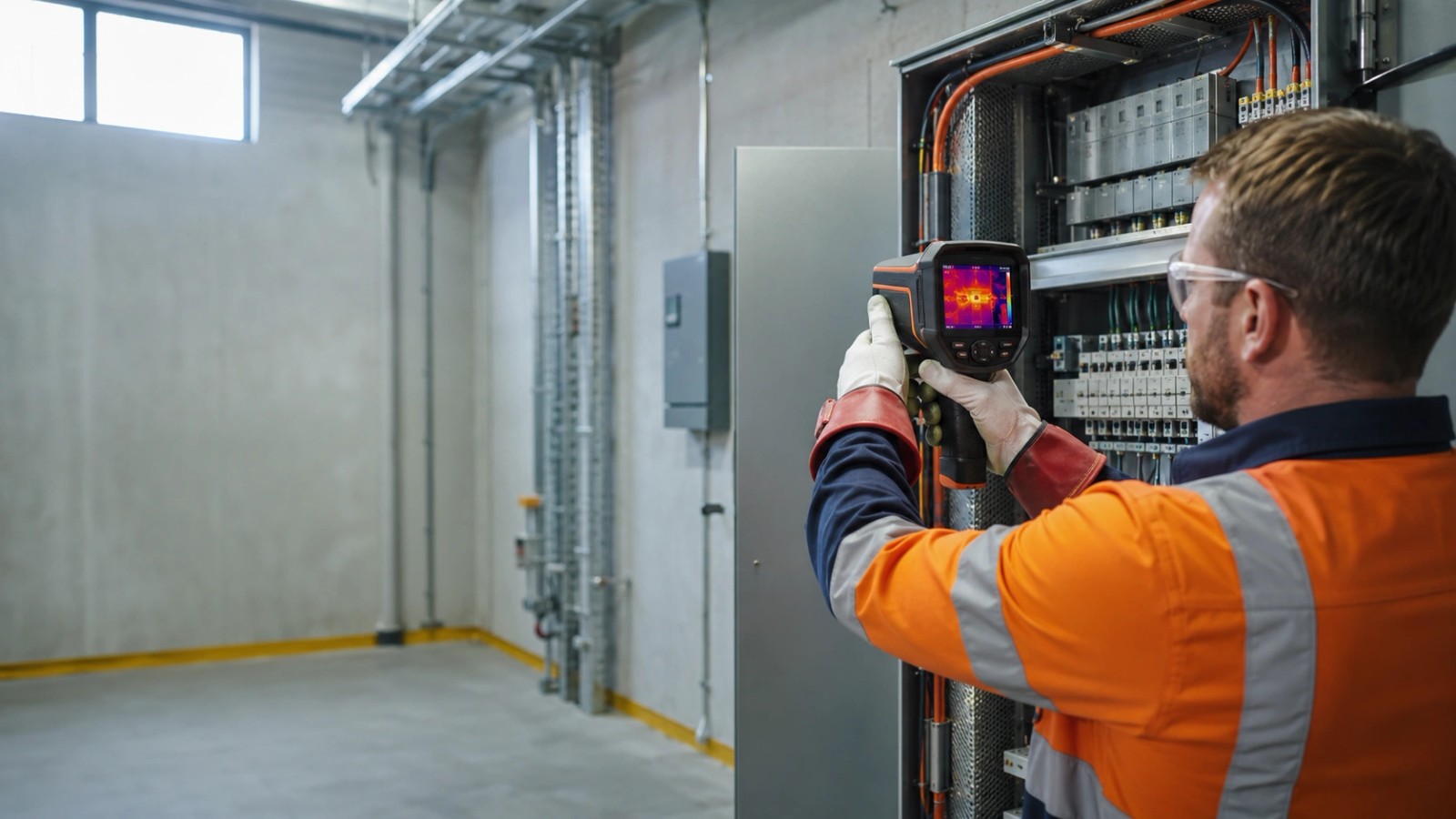
Loose or corroded terminations generate heat well before they arc. Thermal imaging catches them while the board is live and under load, which is why it belongs in any serious inspection regime.
Key Benefits of Preventive Electrical Maintenance
Scheduled maintenance turns unpredictable emergency spending into a fixed line item, keeps interruptions inside planned windows, extends the life of switchgear and motors, and builds the documented history auditors, insurers and incoming tenants ask for.
Compliance with Australian Standards
Australian installations are designed and verified against AS/NZS 3000:2018 (the Wiring Rules), including Amendments 1 and 2 of 2020 and Amendment 3 of 2025. In-service testing of equipment follows AS/NZS 3760:2022, and routine service of emergency and exit lighting follows AS/NZS 2293.2:2019. In NSW, electrical work must be done by a licence holder and certified with a Certificate of Compliance Electrical Work (CCEW).
What Should Be Included in an Electrical Maintenance Plan?
- Visual and functional inspection of switchboards and distribution boards
- Thermal imaging of boards, terminations and major connections under load
- Switchboard servicing: cleaning, torque checks, labelling, schedule updates
- RCD testing at intervals set for the equipment and environment
- Emergency and exit lighting testing with logbook entries
- UPS, generator and backup system checks
- Test and tag of portable equipment to AS/NZS 3760
- A written report with photographs, defect ratings and recommended actions
Industries That Benefit Most
Any site where a power interruption stops revenue or creates risk: offices, warehouses, manufacturing plants, hospitals and medical suites, schools, shopping centres, hotels, strata residential buildings, retail chains and government facilities. Strata buildings deserve particular attention, since common-property switchboards and emergency lighting are often last in the maintenance budget.
Signs Your Business Needs Preventive Electrical Maintenance
- Breakers or RCDs tripping more often than they used to
- Warm switchboard doors, buzzing, or a burning smell near a board
- Lights flickering when large equipment starts
- No documented electrical maintenance in the past two years
- A recent fit-out or added plant with no updated board schedule
- An emergency lighting logbook that is out of date or missing
How Often Should Sydney Businesses Schedule Electrical Maintenance?
Frequency depends on risk profile, equipment age and operating environment rather than one universal figure. As a starting point, most commercial buildings run annual switchboard inspection and thermography, six-monthly emergency lighting service, and RCD and portable equipment testing matched to the environment, more often in kitchens and workshops than in a quiet office. Confirm your obligations with a licensed contractor against the relevant standards and your insurer's requirements.
Choosing the Right Commercial Electrical Maintenance Partner in Sydney
Check that the contractor holds a current NSW licence for the work being performed, carries appropriate insurance, and issues CCEWs on completion. Ask what testing equipment they use, whether thermal imaging is included or charged separately, how defects are reported and rated, and how out-of-hours faults are handled. A partner who knows commercial and strata buildings will plan works around trading hours and owners corporation approval cycles. Quin Projects works with Sydney building owners, facility managers and strata committees on planned maintenance programs across commercial and Class 2 buildings.
Frequently Asked Questions
What is preventive electrical maintenance?
Scheduled inspection, testing and servicing of a building's electrical systems, done to find and correct faults before they cause a failure rather than after equipment has stopped.
How is it different from reactive maintenance?
Preventive work runs on a planned schedule at ordinary rates. Reactive work happens when something breaks, usually at emergency rates, always at the worst time.
How often should a commercial switchboard be inspected?
Most commercial sites schedule inspection and thermal imaging annually, with higher-risk industrial sites more often. A licensed contractor should set the interval after assessing the installation.
Is electrical maintenance a legal requirement for NSW businesses? Businesses hold work health and safety duties covering electrical risks, and some assets, emergency lighting in particular, carry defined service obligations.
What is thermal imaging and why does it matter?
An infrared camera reads heat at connections while the board is live. Loose terminations run hot long before they arc, so thermography finds faults a visual inspection cannot.
Can preventive maintenance reduce repair costs?
It cuts emergency call-outs and moves repairs into planned windows at standard rates, though the saving depends on the age and condition of the installation.
Book an Inspection Before the Next Failure
If your switchboard runs warm, breakers trip more than they used to, or nobody can find the last inspection report, that is the point to bring someone in. A scheduled assessment costs a fraction of an unplanned shutdown. Contact Quin Projects to arrange an inspection of your building's electrical assets and a maintenance plan built around how your site operates.