
Flat Roof Membranes on Sydney Apartment Buildings: When to Repair or Replace
Flat, concrete roofs are ubiquitous on Sydney apartment blocks. They help retain a building’s street-level appearance, and provide space to house plant equipment and perhaps a rooftop terrace. From the street, nobody thinks about them. The only thing keeping the rain out of the top-floor units is a thin, few-millimeter waterproofing membrane, and typically, nobody goes up there to check it.
When that membrane starts to break down, the first evidence is typically a ceiling stain in a top-floor unit. By that point, water has likely been getting in for some time. This report breaks down the failure mechanisms of roof membranes and the differences between repairs and replacements, and outlines the things that strata committees should look out for when approving repairs.
Understanding the Role of a Roof Membrane
A concrete slab, in and of itself, is not waterproof. It will crack. A waterproofing membrane helps to tie together the elements of the waterproofing system, i.e. a continuous layer that turns at walls and upstands, drains, and penetrations.
Types of membranes found in Sydney include:
- Torch-on bituminous sheet (found in the older buildings)
- Liquid-applied membranes (polyurethane or acrylic systems, rolled or sprayed on)
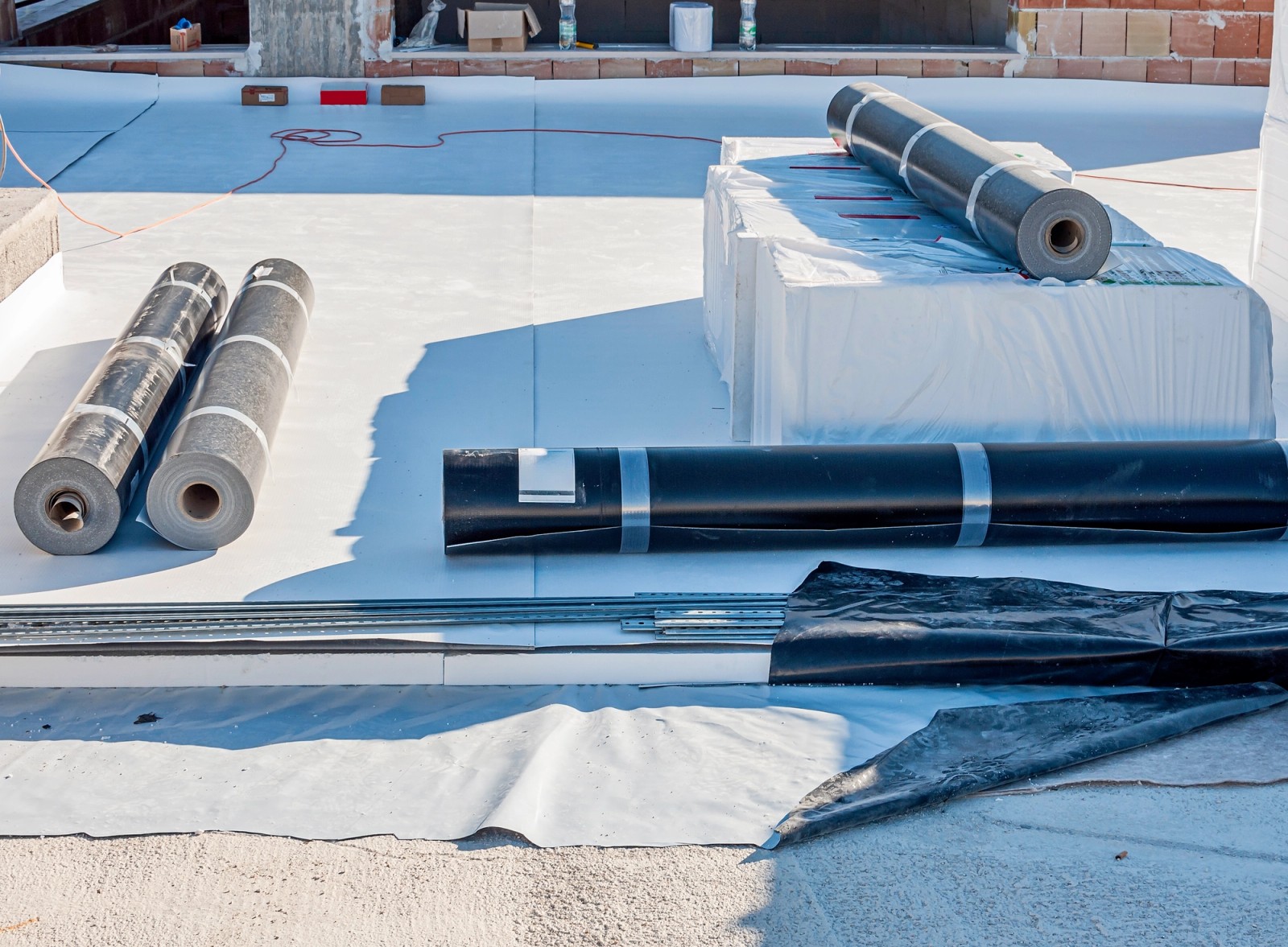
- Sheet membranes (PVC or TPO, large sheets that are welded together)
All have their own lifetime and mechanisms of failure, and all must be properly installed and detailed to function as designed.
Common Signs of Roof Membrane Failure
If you observe the following, get the roof inspected:
- Water stains or bubbling paint on top-floor ceilings
- Water ponding on the roof that does not drain away within a day or so after a storm
- Blisters, splits, or bubbles in the roof membrane
- Membrane edge lifting or peeling
- Cracked and brittle membrane that has faded or chalked
- Plants or moss growing on the roof
- Damage around roof plants, solar mounts, or antennas that penetrate through the roof membrane
Ponding describes water that collects and remains on a membrane for a long time. Water that sits on the membrane for a long time accelerates the breakdown of the roof membrane. Ponding may occur due to a clogged drain or no sufficient roof slope to allow water to drain.
A membrane repair is often warranted if the membrane is generally in good condition and the failure is local, for example, if there is a split or blister in an otherwise good area of the membrane, or around a new roof drain. In these cases, a membrane repair is justified.
A membrane repair is only effective in the long term if the materials used in the repair are compatible with the existing roof membrane. Frequently, leaks occur in repaired areas because an incompatible product was used in the repair.
When Roof Membrane Replacement Is the Better Option
Replacement will be the more cost effective option when:
- Membrane is at or beyond its expected life
- There are multiple areas of failure
- There is water between the membrane and slab
- There are drainage and other issues with the roof that would require the removal of the existing membrane
- Repairs become recurrent and do not provide a long term solution
In some cases it is possible to lay a new membrane over the old. This will depend on a number of factors including the condition of the existing system, how it relates to the new system, and the impact the new membrane would have on upstands, drains and doors.
Waterproofing Requirements for Class 2 Buildings
Waterproofing of roofs on Class 2 buildings is governed by the Design and Building Practitioners Act 2020. Waterproofing membranes on an apartment building would require regulated designs. This means a design practitioner (registered) prepares the design, a building practitioner (registered) carries out the building work and the documentation is lodged on the NSW Planning Portal.
As there is some lead time to carry out this work, a committee may want to consider replacing roof membranes before leaks become problematic. If not, the leaks may drive the need for replacement and this may not be within your 10 year plan for Capital Works.
Key Questions to Ask Before Approving Roof Works
- Has the entire roof including drains and upstands and roof penetrations been inspected?
- Is the recommendation an overlay or a full roof replacement and why?
- What roofing system is being proposed and will it work with the current system?
- Is the contractor registered under the DBP act and who is the design practitioner?
- How will the residents be impacted and what will happen if it rains during the course of the work?
- What is the warranty and who will be providing it?
Arrange Roof Membrane Repairs or Replacement With Quin Projects
Roof membrane works in Sydney for Strata and commercial properties. We will inspect your roof, recommend and carry out repairs or replace the roof as required under the DBP act for Class 2 buildings.
For a remedial quote or call us on 1300 201 253.
Frequently Asked Questions
What Is the Average Lifespan of a Roof Membrane?
The lifespan depends on the membrane system, installation quality and ongoing maintenance. UV exposure can also shorten membrane life. Ask your contractor about the expected service life of the proposed system.
Can a New Membrane Be Installed Over an Existing One?
Sometimes, depending on condition of the old membrane and drains, thresholds, and upstands.
Does Roof Membrane Replacement Require DBP Act Compliance?
Yes, for Class 2 buildings in NSW. Rooftop membrane replacement is considered regulated design work by NSW government guidance.
Why Is Water Ponding on Our Roof?
Most likely due to insufficient roof drainage or a blocked roof drain. If water is ponding on the roof, it is shortening the life of the roof membrane.